
Loading page

Loading page

Site footer

Draxon Systems

We build custom web and business systems that help companies automate processes, improve efficiency, and scale faster.

Services

  • Web Development Services
  • CRM Development
  • E-commerce Development
  • AI Automation Solutions
  • Business systems

Company

  • About
  • Portfolio
  • Services
  • Blog
  • Contact

Contact

© 2026 Draxon Systems. All rights reserved.

Privacy PolicyTerms of ServiceCookie PolicySitemap
Draxon Systems
Services
Core services
Web developmentCRM developmentE-commerce developmentAI automation
PortfolioAboutBlog
Get consultationView our work

Loading page

← Services

March 31, 2026

Web Development Services for Scalable Business Growth

DS

Draxon Systems

Custom web & business systems

When off-the-shelf software forces compromises, custom web development services become the most direct path to a product that fits how your company actually operates. Draxon Systems designs and builds business web applications and scalable web platforms that connect teams, automate repetitive work, and give leadership clear visibility into performance—without the fragility of a patchwork of spreadsheets and disconnected tools.

We work with companies that are serious about outcomes: faster cycles, fewer errors, stronger security, and software that can grow with the business. This page explains what our web development services include, who they are for, and how we deliver from first workshop to production launch.

Share
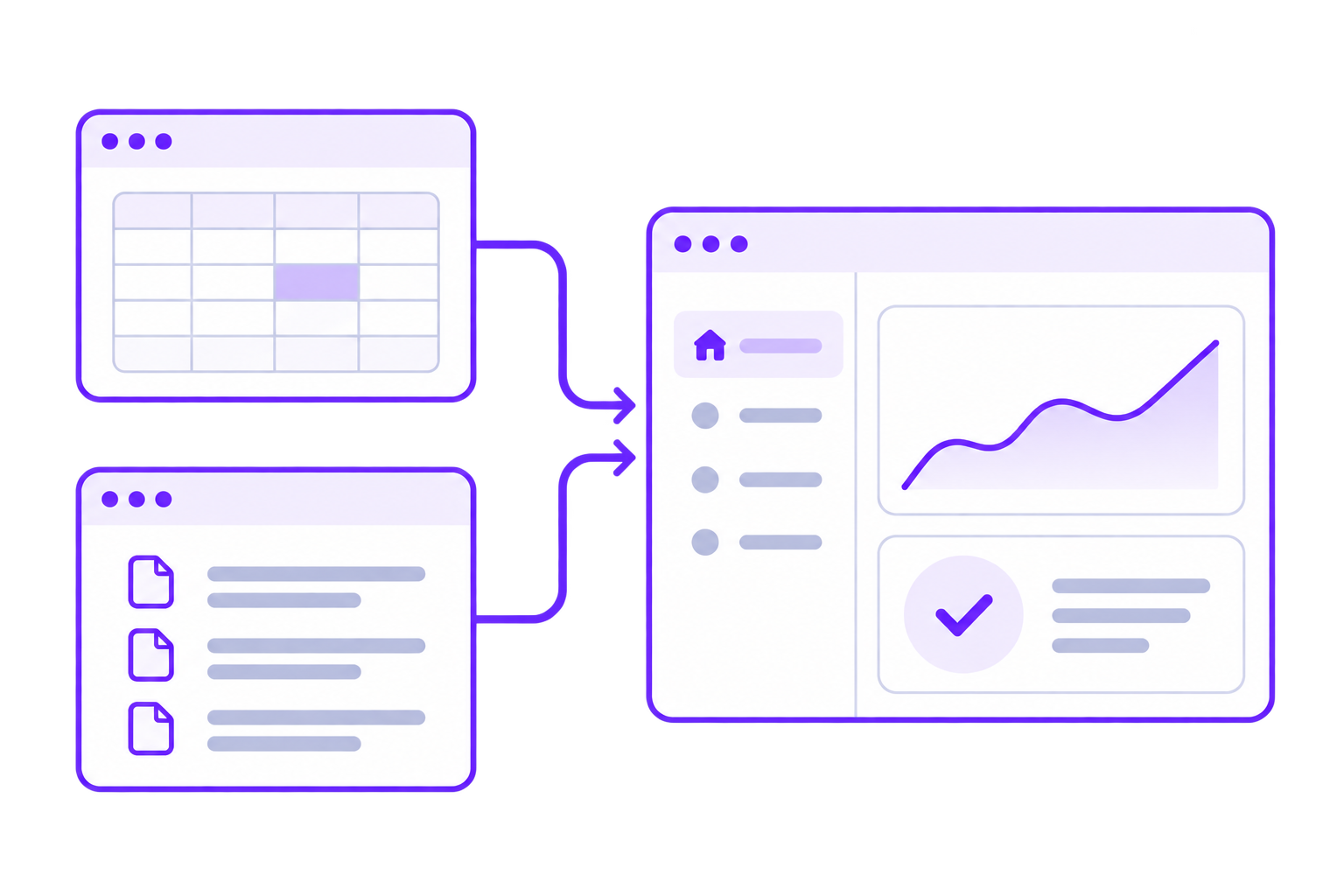
Custom web development: scalable business platforms and engineering workflows

How we deliver

Delivery & accountability

Concrete ownership, scope, stack, and team structure—so this reads as shipped work, not a concept deck.

Our role

We deliver enterprise web applications as shippable increments: information architecture, UX, frontend performance, SEO foundations, and integration with your CRM or ops stack. Design is treated as part of the system—components, content models, and analytics hooks—not a one-off mockup.

Project scope

  • IA and conversion paths aligned to how buyers and partners actually evaluate you.
  • Design system–driven UI (spacing, typography, accessibility) for marketing and authenticated areas.
  • Core Web Vitals, structured data, and crawlable routes suitable for long-term SEO growth.
  • CMS or headless content patterns so marketing can ship without engineering bottlenecks.
  • Staging previews, analytics events, and release checklists for safe production pushes.

Technologies used

  • Next.js / ReactApp Router, server components where appropriate, image and font optimization.
  • Tailwind CSSConsistent tokens and responsive layouts without one-off CSS sprawl.
  • Vercel or client cloudEdge-ready hosting aligned to your compliance and region needs.
  • Payload / headless CMSWhen the project calls for editor-controlled pages and previews.
  • Analytics & Search ConsoleEvent naming, sitemap, and monitoring for ongoing iteration.

Team involvement

  • Frontend + full-stack engineers paired with design for implementation fidelity.
  • Technical SEO and performance review as part of launch criteria—not an afterthought.
  • Your marketing and product stakeholders for copy, compliance, and approval workflows.

Fit check

Let’s design your business platform

From performance and SEO foundations to authenticated areas—scoped as increments you can ship.

Discuss the buildSee delivered work

OVERVIEW

Modern web development services are not simply “building a website.” For growing companies, the web is often the primary surface where work happens: internal teams collaborate, customers onboard, partners integrate, and leadership reviews what is true in real time. That requires more than a polished interface—it requires architecture that stays fast under load, integrations that do not break quietly, and a codebase that your team can evolve without fear.

What web development means for your business

In practice, custom web development is the disciplined process of turning a business capability into a reliable digital system: clarifying requirements, modeling workflows, designing APIs and data flows, implementing secure access patterns, and shipping a product that can be monitored, measured, and improved. The goal is not novelty; it is operational leverage—fewer manual steps, clearer accountability, and a platform that supports the next stage of scale.

Business web applications are where this value compounds. Whether you are replacing legacy internal tools, launching a new customer-facing experience, or consolidating fragmented processes into one coherent system, the engineering decisions you make early determine whether the product becomes an asset or a liability. Performance, maintainability, and observability are not “nice-to-haves” for enterprise web development—they are the difference between software that quietly supports revenue and software that becomes a recurring emergency.

Who needs enterprise web development and scalable web platforms

Organizations typically engage us when one or more of these realities show up:

  • You are outgrowing tools that were never designed for your process volume, and workarounds are now part of the job description.
  • You need a scalable web platform that can add modules, tenants, or regions without rewriting the core product every year.
  • You must integrate with CRMs, ERPs, payment providers, identity systems, and internal APIs—reliably, auditably, and with clear error handling.
  • You care about security and compliance not as buzzwords, but as operational requirements that influence architecture and release discipline.
  • You want a partner who can translate business language into engineering trade-offs, then ship on a timeline that respects commercial pressure.

If that sounds familiar, you are not looking for a generic agency deliverable. You are looking for a product-minded engineering team that treats your web platform as infrastructure for growth.

HOW THIS PAGE MAPS TO OUR DELIVERY MODEL

The sections below—benefits, what we build, process, and use cases—translate directly into how we scope and deliver work. When you engage Draxon Systems for web development services, you should expect clarity: what we are building, why it is structured that way, what “done” means, and how we will operate it after launch.

WHY STRATEGIC WEB DEVELOPMENT MATTERS NOW

Most leadership teams do not struggle with a lack of software—they struggle with fragmented truth. The same customer exists in three systems. The same metric is calculated differently in two departments. A critical approval still lives in email because the “official” tool never matched reality. Custom web development is strategic when it becomes the place where the organization agrees on what is true, what happens next, and who is accountable.

That is also why scalable web platforms are not only a technical concern. They are a coordination technology. When your platform is slow, brittle, or opaque, you pay for it in meetings, rework, and missed opportunities. When it is fast, observable, and aligned to process, you recover time and attention for higher-leverage work—selling, serving customers, improving products, and making decisions with cleaner signals.

WHAT “GOOD” LOOKS LIKE IN PRACTICE

Strong business web applications feel boring in the right ways: predictable releases, understandable errors, permissions that match real responsibility, and dashboards that do not require a translator. Strong enterprise web development teams write for the next engineer as much as the current feature—because the cost of software is not only build; it is change. Draxon Systems optimizes for that total cost: clarity today, velocity tomorrow.

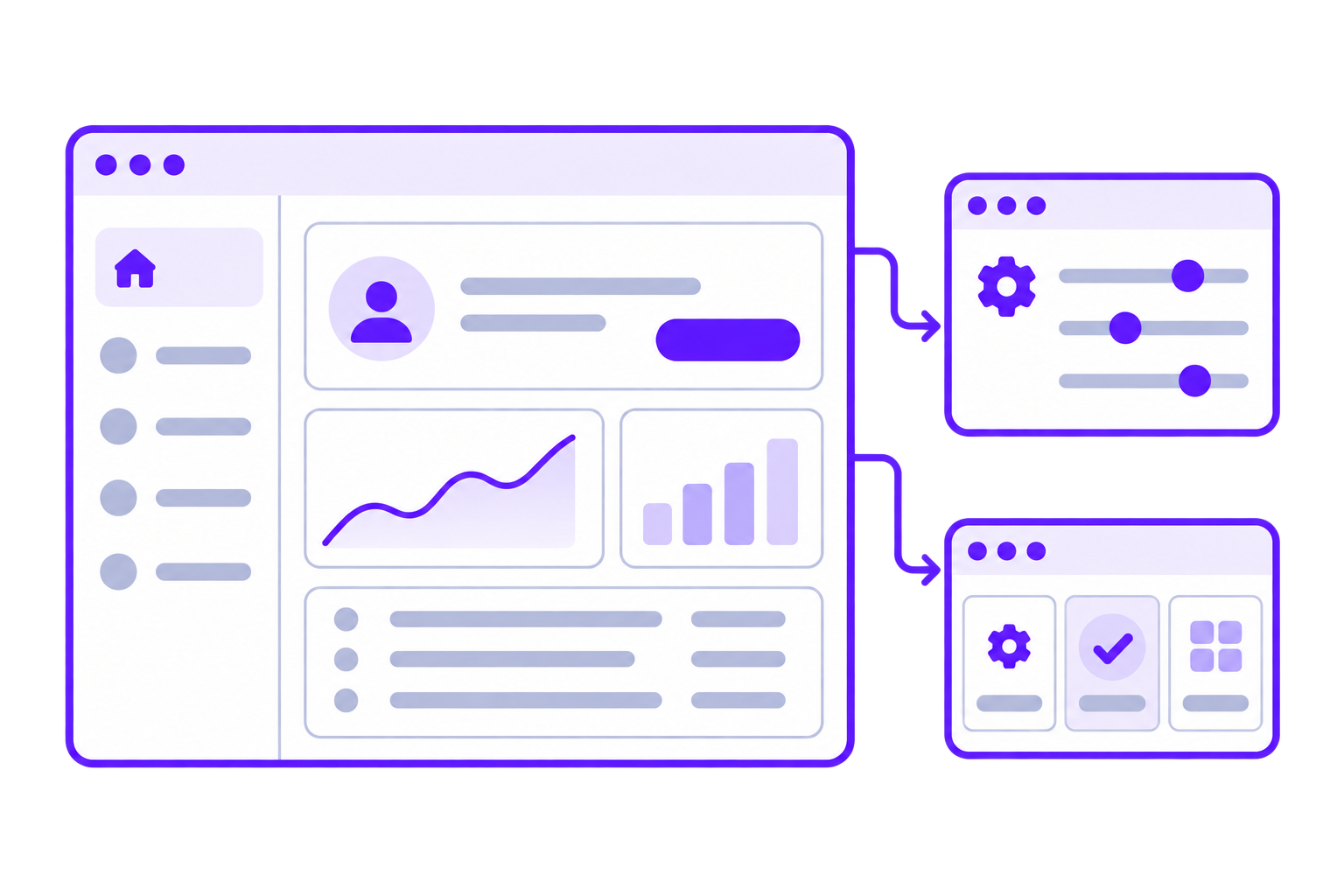
Enterprise web development: architecture, integrations, and delivery model

Benefits

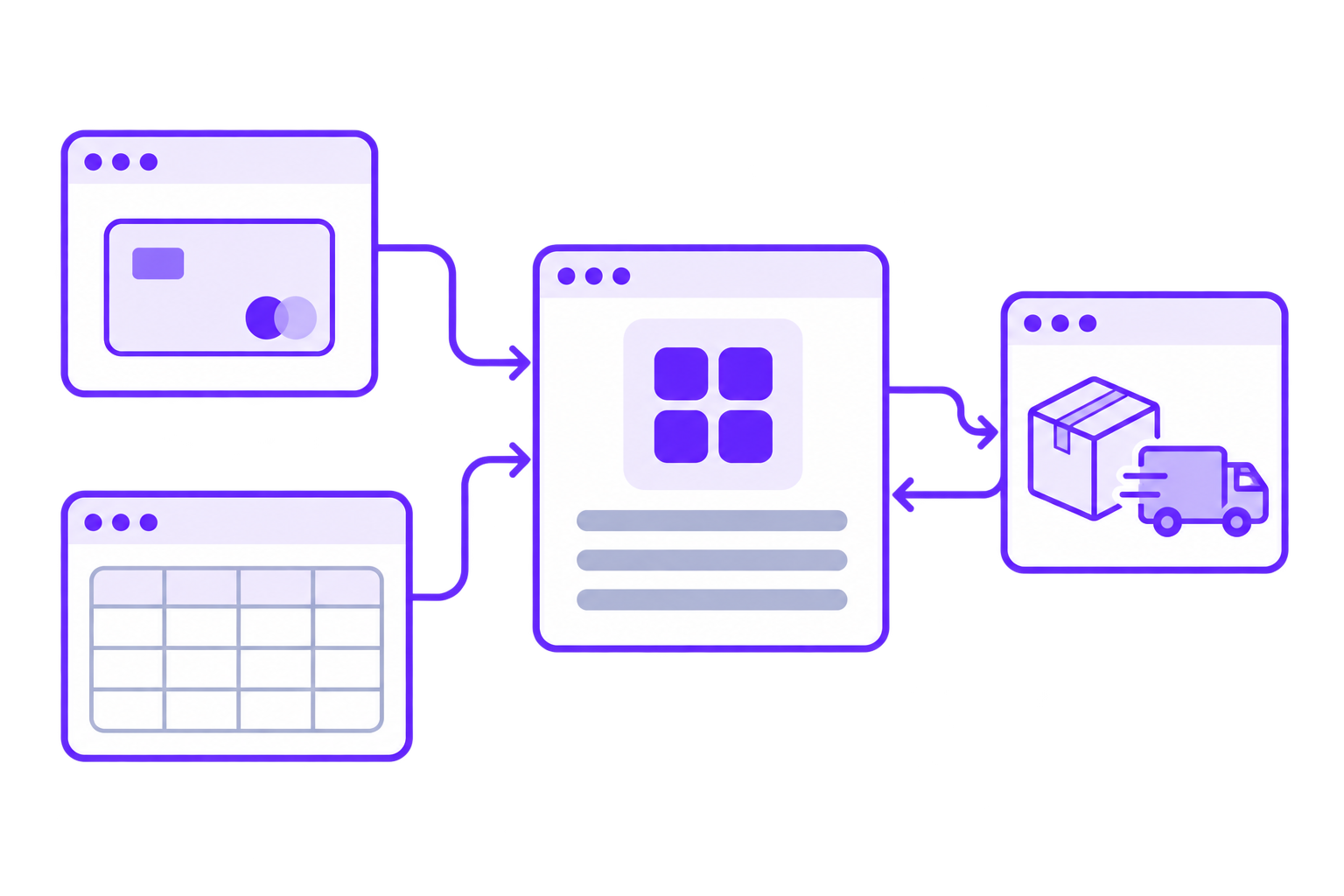
Scalability, performance, automation, and integrations for business web applications
  • Scalability without reckless complexity

    Scalable web platforms are built from clear boundaries: services that can evolve independently, data models that do not paint you into a corner, and deployment patterns that let you grow traffic, teams, and feature sets without a rewrite. We design for the next 24 months of growth—not a hypothetical decade—so you invest in architecture where it matters and avoid gold-plating where it does not.

  • Performance as a business metric

    Slow software taxes every user interaction. For customer-facing products, performance affects conversion and trust. For internal systems, it affects adoption—people will quietly route around a tool that feels sluggish. Our web development services emphasize performance-first engineering: realistic budgets for queries and rendering, caching where it is appropriate, and instrumentation so you can see regressions before users do.

  • Automation that removes operational drag

    Custom web development should reduce manual coordination: approvals, notifications, validations, reconciliations, and reporting. Automation is not about replacing people; it is about removing repeated decisions that machines handle better—consistently, traceably, and at scale. We align automation with your operational reality so teams keep control where human judgment matters.

  • Integration with real business processes

    Enterprise web development lives or dies on integrations. A beautiful UI that cannot reliably sync with your source systems becomes another silo. We treat integrations as first-class: contracts, retries, monitoring, and clear failure modes—so your business web applications reflect what is actually happening across CRM, billing, logistics, and internal databases—not a partial snapshot that quietly drifts out of date.

What we build

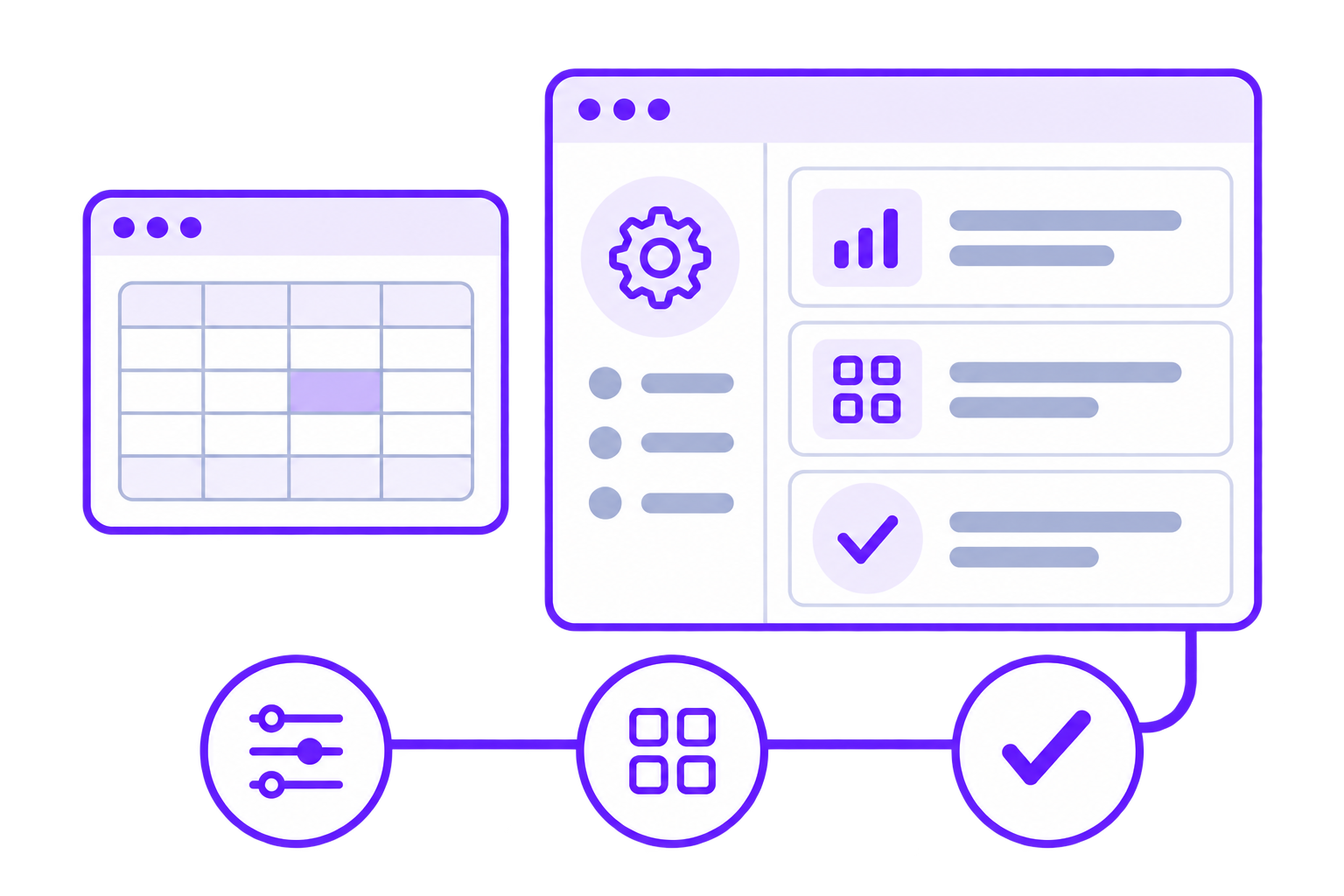
Admin panels, SaaS platforms, internal tools, and analytics dashboards
  • Admin panels and operations consoles tailored to roles, permissions, and audit needs—so teams work inside a coherent system instead of juggling exports.
  • SaaS platforms and multi-tenant products engineered for isolation, billing hooks, and feature rollout—built for scalable web platforms as you add customers.
  • Internal tools that replace spreadsheet sprawl with validated workflows, single sources of truth, and clear ownership—high leverage for custom web development.
  • Dashboards and reporting layers that connect metrics to decisions—performance-oriented, permission-aware, and designed for leadership review without IT bottlenecks.

Process

Discovery, architecture, iterative development, and launch with continuous improvement
  1. Discovery and product framing

    We align on outcomes, constraints, stakeholders, and success metrics. Discovery is where we translate business language into requirements, risks, and a delivery plan—so engineering decisions map to what the organization actually needs from business web applications.

  2. Architecture and technical design

    We define the system shape: domains, data flows, integration points, security model, and operational approach. For enterprise web development, this stage prevents expensive rework—especially when multiple teams depend on the same platform decisions.

  3. Development in tight feedback loops

    We build incrementally with visible progress: milestones you can review, interfaces you can test, and integration work that is proven early—not deferred until the end. This is how custom web development stays predictable under real-world ambiguity.

  4. Launch, handover, and continuous improvement

    We ship with runbooks, monitoring hooks, and a clear ownership path. Launch is not the finish line for scalable web platforms—it is the point where real usage begins. We structure delivery so you can measure, iterate, and extend without starting from zero.

Use cases

Internal systems, customer platforms, and decision-ready dashboards
  • Internal systems that match how your teams really work

    When departments rely on custom workflows—approvals, exceptions, cross-team handoffs—generic SaaS often forces painful compromises. We build internal business web applications that reflect your operating model: permissions that mirror responsibility, audit trails that stand up to scrutiny, and UX that teams will actually adopt. The outcome is fewer errors, faster cycle times, and leadership visibility that is grounded in operational truth—not manual reconciliation.

  • Customer platforms that earn retention

    For many companies, the product is the platform: onboarding, service delivery, account management, and expansion live in the browser. Our web development services focus on reliability and clarity—fast paths for common tasks, resilient integrations, and a foundation that supports new offerings without destabilizing the core. That is how custom web development becomes a retention and revenue lever, not a quarterly IT project.

  • Data dashboards that drive decisions, not debates

    Dashboards fail when metrics are untrusted. We build reporting surfaces that are explicit about definitions, freshness, and access—so leaders can compare regions, products, or teams without a parallel shadow analytics process. This is especially valuable when data spans multiple systems and teams need a single place to align on what “good” looks like.

Why choose us

Enterprise delivery, maintainable architecture, and performance-first engineering
  • Enterprise-grade delivery experience

    We are comfortable with the expectations that accompany serious commercial software: security conversations, stakeholder alignment, phased rollouts, and the reality that launches touch finance, legal, and operations. Our web development services are structured for organizations that cannot afford heroics as a strategy.

  • Clean architecture you can extend

    We prioritize maintainability because your platform will change—new markets, new regulations, new integrations. Clean boundaries and disciplined patterns reduce the cost of every future feature. That is a core reason teams choose Draxon Systems for enterprise web development rather than chasing the lowest quote.

  • Performance-first engineering culture

    We treat latency, reliability, and cost-to-serve as product qualities. For scalable web platforms, performance is not a single ticket at the end; it is a constraint we design for continuously—so your users feel it in every session.

FAQ

FAQ on web development scope, pricing, technologies, and post-launch support
What do your web development services include end to end?
We cover product discovery, UX and technical architecture, implementation, integrations, QA, deployment, and launch support. The exact shape depends on your stage—some clients need a net-new scalable web platform, others need to modernize a critical internal system. We scope deliverables explicitly so you know what is included, what is optional, and what success looks like in production.
How is custom web development different from hiring freelancers or a generic agency?
The difference is ownership and systems thinking. Freelancers can execute tasks; agencies can ship campaigns. Draxon Systems is structured to build business web applications as long-lived products: integration discipline, operational readiness, and engineering decisions that do not collapse when requirements evolve. You get a team that thinks in terms of reliability, security, and maintainability—not just deliverables on a checklist.
Do you build enterprise web development for regulated environments?
We frequently work with requirements around access control, auditability, data handling, and integration with identity providers. We do not treat compliance as a bolt-on checkbox; we bake it into roles, logging, and release practices. If you have specific regulatory constraints, we align architecture and documentation to what your reviewers need to see.
What technologies do you use for scalable web platforms?
We choose stacks based on your constraints: performance needs, team skills, integration landscape, and hosting realities. We are pragmatic—modern web frameworks, solid API design, and infrastructure patterns that support observability and safe releases. The goal is a scalable web platform your team can operate, not a resume-driven experiment.
How do you price custom web development projects?
We typically work from a defined scope and milestone plan, with room for discovery outcomes to refine the roadmap. Pricing reflects complexity—integrations, compliance, multi-tenancy, and operational requirements are the major drivers. If you share goals and constraints, we can propose an approach that matches both commercial pressure and engineering quality.
Will you maintain and evolve the product after launch?
Yes—many clients engage us for continuous improvement: new modules, performance work, integration changes, and feature rollout. Launch is where measurement begins; the best business web applications improve continuously once real usage reveals what matters most.
How long does it take to ship a business web application?
Timelines depend on scope, integration complexity, and how decisively stakeholders can align. A focused internal tool can move faster than a multi-tenant SaaS platform with heavy compliance needs. Discovery and architecture quality pay off here: rushing early decisions usually costs more calendar time later. We will give you a realistic plan after we understand the problem space.
How do web development services connect to CRM or automation initiatives?
Your web platform is often the hub: CRM holds relationships, the web product delivers the experience, and automation removes manual steps between systems. We design integrations so data stays consistent and workflows remain traceable—so CRM development, e-commerce, and automation initiatives reinforce each other instead of competing for attention.
Plan a web platform roadmap with Draxon Systems

Plan a web platform that scales with the business

If you are evaluating custom web development for a critical workflow, customer product, or internal system, we will help you clarify scope, risks, and a sane path to production—without generic promises.

Discuss your web development roadmap

When timing matters

Let’s design your business platform

We work best when delivery is aligned to measurable outcomes—visibility, throughput, and safe integration boundaries.

Request a consultationSee case studies
Related services: CRM, AI automation, and ecommerce development
Related articles on web development and adjacent topics
← All servicesContact

Share

Related articles

Articles linked to this service in the CMS (primary or related).

  • Integrations 101: How to Connect Your Website to CRM, Payments, and Internal Tools Without a Mess

    A practical integration playbook for websites: data ownership, idempotency, retries, reconciliation, and monitoring for production reliability.

  • Performance Budget for Business Websites: What to Measure and What to Fix First

    A practical performance budget framework for business websites: prioritize fixes by commercial impact, not by lab scores alone.

  • Web Application Architecture for Non-Technical Founders: A Practical Blueprint

    A practical architecture blueprint for founders: frontend, API boundaries, data model, auth, observability, and release discipline tied to business outcomes.

  • Custom Web Development vs Website Builders: When No-Code Breaks at Scale

    A decision framework for teams outgrowing templates: integration reliability, SEO control, performance budgets, and the real cost of workaround-heavy delivery.

Related services

Explore adjacent delivery lanes that commonly pair with this service scope.

  • Custom CRM Development for Scalable Business Operations

    Custom CRM development for sales, service, and operations—business systems with workflow automation and integrations built around how you close and deliver.

  • AI Automation Solutions for Modern Business Operations

    AI automation services for workflow automation, integrations, and reviewable AI outputs—built for production operations, not demos.

  • E-commerce Development Services for Scalable Online Stores

    Custom ecommerce development for scalable online stores, checkout reliability, and integrations with ERP, payments, and ops—built for conversion and real traffic.

Related case studies

Production systems with comparable workflow depth, permissions, and rollout patterns.

  • Airport Way — homepage on desktop: hero, booking search, and brand presentation

    Airport Operations Management System

    CRM-style operations platform: workflows, tasks, roles, and dashboards for coordination-heavy environments.

    Read the case study →

  • Enterprise SaaS platform — control-plane architecture and operator surfaces, editorial cover

    SaaS Internal Platform & System Architecture

    First-party enterprise platform: bounded architecture, orchestrated lifecycles, operator-grade surfaces, and extension paths that limit blast radius as the roadmap accelerates.

    Read the case study →

  • AI Automation Platform & Workflow System

    Operational automation layer: orchestrated workflows, unified integration spine, governed AI at intake, and one operator control surface—built to run the business, not bolt on features.

    Read the case study →

  • AI-powered coffee e-commerce — personalization, subscriptions, and storefront — editorial cover

    AI-Powered Coffee E-commerce Platform

    Adaptive coffee commerce product: behavioral personalization, AI-assisted interaction, subscription automation, and merchandising built for retention—not a generic online shop.

    Read the case study →

Prefer a direct conversation? Contact Draxon Systems about your roadmap